
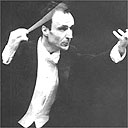
Otto Nicolai is best remembered for founding the Vienna Philharmonic in 1842, but he also composed a popular operatic setting of The Merry Wives of Windsor. The Hallé, continuing this season's exploration of music inspired by Shakespeare, performed Nicolai's overture with affectionate charm, while conductor Oleg Caetani conjured a mood that invoked Austrian polkas rather more than frolics in Windsor Great Park.
Chopin's piano concertos lack the grace and drama of Mozart's concertos, the power of Beethoven's, and the passion of the greatest Russian romantics. Yet the Hallé showed that there is more to his Piano Concerto No 1 in E minor than its detractors would suggest. The opening statement was vivid and expressive, with the orchestra sounding muscular and immaculately balanced.
Caetani produced an especially well-integrated texture, and soloist Martin Roscoe played with clarity in even the most complex passages. In the slow Romanze, Caetani created a sublime atmosphere for Roscoe's piano to float above.
After the interval Caetani commenced Beethoven's Symphony No 5 by launching into the most famous four notes in classical music whether or not the Bridgewater Hall was ready for him, and thus instantly captured its attention.
The tasteful approach that was so profitable in Nicolai and Chopin could have been less advantageous here, yet Caetani's handling of the opening motif possessed plenty of drama. Tempos were particularly steady, which enabled the listener to pick out a wealth of detail from the Hallé's solid playing in the refreshingly ego-less central movements.
Yet, although Caetani's Beethoven provided healthy nourishment, it was not as spicy as it could have been. Beethoven surely intended something infinitely more urgent and revolutionary in the last movement than Caetani's radiant and reassuring conclusion, which simply failed to catch fire.
Caetani's articulate and patient textural manipulation often showed the traditional symphony orchestra style at its best, but failed at the last hurdle because this meaty Beethoven simply lacked enough sauce.
