
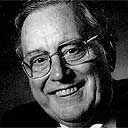
Members of the audience for the Chamber Orchestra of Europe in Birmingham on Saturday must have been reassured to read in their programmes that the concert had been "recommended by Classic FM". But with Charles Mackerras conducting, this was never likely to be a bland, easy-listening experience. Mackerras's performances always have a wealth of historical awareness behind them, while the unfailingly responsive COE is no stranger to working with conductors like him, who so constructively blur the distinctions between traditional and period performances.
Brahms's First Symphony was the highlight here. Mackerras has examined contemporary accounts of the interpretations that the composer himself approved, and realised that they used far smaller orchestral forces than we usually hear performing those works today - a band of about 50 players - while tempo and expression markings were treated much more flexibly. Although the COE boasted a slightly larger string section than Brahms would have known, the balance between it and the wind section was still tellingly equal. There was never a suggestion of important woodwind detail being suffocated by a blanket of strings. Every important statement cut through like a knife, and Mackerras emphasised the transparency by having the sound of Symphony Hall as dry as possible, with all the doors to its resonance chambers firmly closed.
That was only part of the story, though. Sometimes performances of Brahms's First can seem to be a succession of slow movements, but there was never a danger of that with Mackerras in control. Everything had dash and purpose: the main Allegro of the first movement was launched with elan, the tempo always fluctuating, its expressive upbeats perfectly emphasised and maintained right to the end. The slow movement was shaped to a series of powerful climaxes, while the great thematic statements of the finale were given an operatic vividness. Mackerras brought equal insights to two numbers from Schubert's incidental music to Rosamunde; the first Entr'acte in particular had almost symphonic weight and drama. The Czech mezzo-soprano Magdalena Kozena contributed some Mozart opera arias, lavishing her familiar creamy tone and faultless technique on every phrase. However, she never really managed to convey much sense of theatre, except in Cherubino's Voi che Sapete from The Marriage of Figaro, which was included as an encore.
Zerlina's Batti, Batti from Don Giovanni was studiedly sincere, with no sense of flirtatiousness; Sextus's Parto, Parto from La Clemenza di Tito was detached, never really suggesting it had ever been heard on stage.
· Repeated tonight at the Royal Festival Hall, London SE1. Box office: 020-7960 4242.
