
After the nostalgia frenzy of 2001, 2002 won't be as notable for jazz reminiscing. Last summer, Ken Burns's documentary gave public awareness of jazz a shot in the arm; during 2002, it will receive a steadier, more enduring drip-feed courtesy of the BBC, which has decided to get behind the spirit as well as the letter of the music. BBC cred - it is broadcasting everything from the mainstream to the sharp end, is sponsoring the London jazz festival and promoting the BBC jazz awards - should encourage other backers to get in on the act. The Jerwood Foundation is already putting a big stash into May's Cheltenham jazz festival to fund the showcasing of rising stars. British "Afro-Saxon" bandleader Alex Wilson will be one of the beneficiaries.
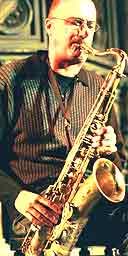
High-profile visitors in the spring will include piano star Brad Mehldau in January, and iconoclasts Don Byron and John Zorn in March (all at the Barbican). British pianist John Taylor, who has been a largely overlooked, world-class act for years, gets a Contemporary Music Network tour in January to help him celebrate his 60th birthday (his trio album with Americans Joey Baron and Mark Johnson will be one to catch). In February Michael Brecker embarks on a UK tour with a mixed British and American band.
Those who like something more wayward should enjoy a rare visit by that irrepressible former enfant terrible of the 1960s, avant-garde pianist Cecil Taylor, who arrives with his Bang on a Can project in May. Or if no-holds-barred world jazz is your thing, then Rabih Abou-Khalil, the Lebanese oud player who leads a kind of Middle Eastern Dirty Dozen Brass Band, is scheduled for his first British tour next year; it should be unmissable.
New Year wish for the British jazz scene as 2002 dawns? The survival of the Vortex in north London, which is scheduled for the financial drop in March, but now has the likes of Charlie Watts and Elton John rooting for it. It's an efficiently shambolic music venue where anything can happen, and where musicians devoted to that impulse can feel loved.
