
By all the normal rules of music and fashion, the extraordinary story of the Buena Vista Social Club ought to be over, but it just keeps going. Six years on from the release of the album that shook up Cuban music, a whole batch of elderly Havana residents have found unexpected fame and fortune - and Ibrahim Ferrer is still the greatest fairytale success story of them all. As a retired singer, he was surviving by selling lottery tickets and shining shoes until he was invited to join those legendary sessions, and now he is a global celebrity who keeps sounding better and better. His new solo set, Buenos Hermanos, has become an instant Cuban classic with its confident blend of delicate ballads and gutsy dance material, matched against rousing backing with an experimental jazz edge, thanks to the likes of guitarist Manuel Galban. He was helped in the studio by his producer Ry Cooder, and now, at the packed-out Albert Hall, he had to show he could sound as impressive live.
It wasn't easy, although he was backed by a remarkable be-suited band, featuring nine horn players, four percussions, and a couple of celebrities. There was Galban, fresh from recording his own quirky album of duets with Cooder, sitting out on the side playing guitar and keyboards, but with his adventurous solo outbursts mysteriously kept to a minimum. And on bass there was the wildly inventive Cachaito Lopez, who was only invited to add a couple of solos. The one instrumentalist given enormous exposure was pianist Roberto Fonseca, who opened the show with his own band, playing anything from late-night jazz to rousing R&B, and then went on to provide dazzling rapid-fire solos, and delicate accompaniment. He'll surely become the next solo star among the Social Club associates.
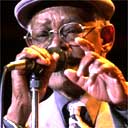
As for Ferrer himself, he had a triumphant evening after a difficult start. He came on in white suit, black shirt, white tie and trademark cap, looking predictably frail for a man in his mid-70s, especially when he started dancing. It seemed at first that he was overwhelmed by the power of the band and missed the help of his one-time sparring partner Omara Portuondo. Songs like No Tiene Telarana sounded far less wild and slinky than on the album, though the ballads performed without mass brass backing were far more subtle and emotional. But like a veteran trouper he kept the best until last, and when he returned after a mid-set rest he was suddenly on his best form. He demonstrated his declamatory, semi-improvised vocals on rousing new songs like Buenos Hermanos or Boquinene, making the most of the big band backing, and then (for the first encore) switched to an exquisite, delicate ballad, Mil Congojas, backed just by Fonseca's piano. By now the Albert Hall crowd were on their feet, dancing and cheering him on like a pop star.
