
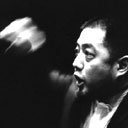
Guest conductor Lu Jia began Verdi's overture to Sicilian Vespers in funereal mood, with uneasy drum rolls and sombre strings. Yet after this introduction, the music was given a charming Italianate lilt, maximising its tunefulness, while the trombone fanfares and agile woodwind of the Royal Liverpool Philharmic Orchestra captured the theatrical context of grand drama. This was a pertinent reminder of what fine concert music this repertoire can be outside the opera house.
Saint-Saëns is popularly associated with the cello, although he was not himself a cellist. He composed his Cello Concerto No 1 for his friend Auguste Tolbecque, and, in this performance, soloist Jonathan Aasgaard adopted a restrained warm sound melting with the orchestral texture indicative of Tolbecque's pioneering interest in the viola da gamba and early music.
Balancing the exoticism of other Saint-Saëns works, this concerto revealed a classical poise, with the RLPO strings staying lean, while the soloist eschewed flashiness in favour of tasteful integration with the accompaniment. The central Allegretto con moto, with its shades of courtly French baroque ballet style on muted strings, was countered by Aasgaard's rich legato melodiousness.
Rachmaninov's Second Symphony may be interpreted as an exorcism of his personal struggles. Yet this rendition was particularly lovely and tender; its potentially angst-ridden opening movement was instead sincere and emotionally powerful.
In the Allegro molto, the RLPO were ravishing in lyrical sections, but also provided stronger forceful passions when required. The exquisitely textured slow movement was gorgeous, impassioned, and full of vitality.
Jia's concept was uncompromisingly romantic, in both senses of the word, and the final movement tied together themes from previous movements before launching into a radiant and vivacious climax.
