
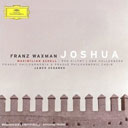
Franz Waxman's reputation as Hollywood's greatest composer has always deflected attention from the works he wrote for the concert hall, of which Joshua, dating from 1959, is among the most important. The trigger was the death of Waxman's wife two years previously, and in depicting Joshua's inheritance of the mantles of both prophecy and leadership from the dying Moses, the oratorio examines the responsibilities for the continuity of human idealism that fall upon the living at times of bereavement. The narrator-driven score owes an immense debt to Waxman's hero Stravinsky, though there are overtones of Bach in the arias, and of Verdi's Requiem.
Elsewhere, vast string chords and meandering woodwind intermittently open up soundscapes that suggest unbearable desolation. The performance, narrated by Maximilan Schell and conducted by James Sedares, is exceptionally strong, though the Prague Philharmonic Choir's English is occasionally unclear.
