
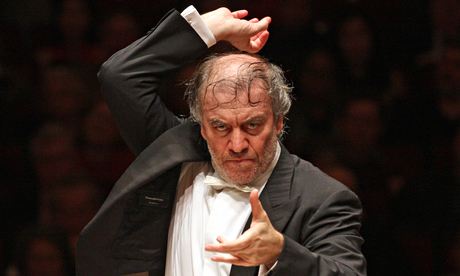
Though they are rarely yoked together on disc, the three symphonies that Shostakovich composed in the 1930s do make a provocative trilogy. The Fourth, which the composer kept under wraps for 27 years in the wake of the official criticism he had received for his opera Lady Macbeth of Mtsensk, is in many ways the greatest and most uncompromising of all his symphonies; the Fifth, his response to that criticism, was the work that would set the stylistic parameters of his symphonic writing for the next quarter century, while the Sixth, with a slow first movement that's almost twice as long as the other two faster ones put together, has one of his most puzzling formal schemes.
It's repertoire in which Valery Gergiev can be irresistible and there are great swaths of these symphonies – in the vast span of the Fourth and good portions of the Fifth especially – when his intensity and that of the Mariinsky Orchestra become just that. But the Sixth is less convincing: the first movement lacks the sense of wholeness and purpose that Gergiev brings so successfully to the Fourth, and despite spectacular playing the other two movements never quite catch fire either.
