
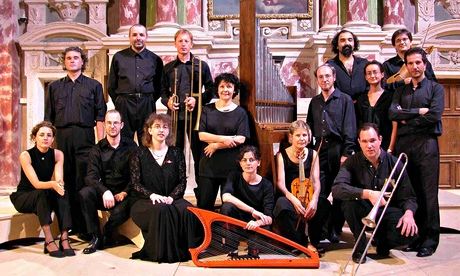
What are arguably the two best known of Guillaume Dufay’s surviving masses, the Missa Se la Face ay Pale and the Missa L’Homme Armé, are also among the earliest mass settings to have been based upon secular songs: Se la Face ay Pale was Dufay’s own chanson, while L’Homme Armé was an anonymous popular song. They are also likely to have been composed in the same year, 1753, as somewhat oblique responses to historical events. Dufay was then working at the court of the Duke of Savoy, who in that year had gained possession of the Turin shroud, with its apparent imprinted image of Christ’s face. The Missa Se la Face ay Pale may have been composed to celebrate the acquisition of the relic, while the Missa L’Homme Armé may have followed a few months later as part of a Christian call to arms in the wake of the fall of Constantinople. Unlike a number of recent more spartan voices-only discs of Dufay, Cantica Symphonia have recorded the masses with instruments; the use of sackbuts especially gives grandeur and warmth to the performances, and a real sense of occasion, too.
