
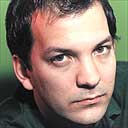
To say that the Barbican 2002 jazz series kicked off with the Brad Mehldau Trio is a little misleading: the expression is too robust for the pianist's undemonstrative, sidelong methods and his glistening, oblique, chamber-jazz style. And yet, Mehldau's music has a compellingly quiet drive that is captivating audiences everywhere.
The same could be said for Mehldau's supporting act, French bassist Henri Texier's trio (which also features his son Sebastien on saxes and clarinets). London club audiences were certainly transfixed last autumn by their character, by Texier senior's cathedral-bell of a bass sound, and by the alertness and unselfishness of drummer Tony Rabeson.
They are all composers, so the band's repertoire is largely original and verydistinctive. Playing a typical mix of roaring free jazz (like scaled-down Albert Ayler), baleful north African atmospherics, and piquant, evocative clarinet ballads, the trio brought the Barbican audience into its own sensuous, romantic, private world.
Mehldau is also pretty good at making the biggest spaces feel like the inside of his head. The contrast with Texier's pulsating music powerfully emphasised the reserve and delicacy of Mehldau's approach to the keyboard: how little he raises his volume, and how much he prefers interwoven counter-melodies, trance-like stillness and steady development to explicitly signalled dynamic dramas.
The trio played an original (the undulating mid-tempo Wait), then segued it by various lateral abstractions into Anything Goes, with something of Mehldau's favourite riff from River Man waving discreetly within it. In a typical distillation of the tune's essential chemistry, the pianist based his long improvisation on the one-note-four-times-repeated core of the song .
He eased into an untitled original and then a Radiohead theme, and played a dazzling unaccompanied break of jangly oriental chords, rippling right-hand arpeggios and pacing left-hand counter-melody, which darted restlessly around the background like a nightwalking insomniac until it dawned that the tune was I've Grown Accustomed to Her Face.
Similarly, the most unadorned statement of the tune of Alone Together came at the end of the improvisation on it. This followed an intricately whirling solo-piano intro (Mehldau's freest rhapsodising is in intros and cadenzas), and familiar demonstrations of the resourcefulness and appropriateness of Larry Grenadier's bass-playing and Jorge Rossy's drumming.
