
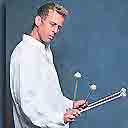
Joe Locke, the flamboyant California vibraphonist, is the kind of musician you frequently prefer to listen to in your sitting room. A former student of the elegant bop vibes guru Bobby Hutcherson, Locke has borrowed his teacher's habits of stagey wonderment and triumphant, get-this stares at his playing partners - but exaggerated them a hundredfold. At gigs, you can end up in such a state of mesmerised exasperation that the music flies over your head.
At Ronnie Scott's as part of the Four Walls for Freedom quartet this week, the vibraphonist is theatrical as ever, but this time everything he plays sounds right on the money, glowing with fresh phrasing. The band's name suggests an equal role for everyone, and everyone plays their heart out. Since the members are Bob Berg on saxes, James Genus on bass and Gary Novak on drums, that amounts to a collective effort that pins you against the wall.
They began on a fast, postbop burn-up as if somebody had fired a starting pistol. Locke ripped out a string of metallic guitar-like phrases, and Novak set off on what turned out to be an astonishing evening's work, with a blur of rolls, jolting offbeats, restlessly shifting cymbal patterns and peremptory crashes that sounded like a grand finale played flat out for a good two-thirds of the set. But, remarkably, his sound was always apposite and sensitive to the unflagging nervous energy of the two principal soloists. As usual, Genus anchored the bottom end with his thick and lustrous bass tone and imaginative phrasing.
The quartet played parts of the suite bearing their name, the first being a hovering, mid-tempo feature for Berg's soprano sax. As if the presence of Berg and Novak were lifting him, Locke confirmed how distinctive and unrepetitive his phrasing can be on a long solo, a mix of darting runs, urgent trills and subtle resolving chords. He then sounded as lyrical and songlike as Gary Burton on the ballad that followed.
British trumpeter Gerard Presencer, playing opposite the American band, offered virtuosity of a more restrained kind - which, after such a maelstrom, came as something of a relief.
