
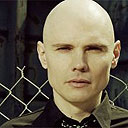
Having been a superhero of alt.rock with Smashing Pumpkins, Billy Corgan hasn't looked quite so sure of himself in his subsequent adventures. His potential new megaband Zwan disappeared before they came anywhere near realising their potential.
Now we have solo Billy, with his new album The Future Embrace, and fresh global conquest looks like an increasingly remote eventuality. There has always been a streak of Joy Division/New Order/The Cure running through Corgan's music, but in his new incarnation he's indulging himself and his pet foibles to an almost comical degree. The album makes for laborious listening, with its draggy tempos and droning synthetic sounds, the mixture hardly brightened by Corgan's milk-curdling whine.
Live, Billy wears black, displays a Lex Luthor-style shaved skull and handles guitar and vocals, but has surrounded himself with a trio of musicians - one of them female, exactly as in his previous two bands - playing synths and electronically-enhanced drums. Watching them standing at their stylised music stations wearing quaint techo-goth costumes was like stumbling into a Depeche Mode gig from 1988, except shorn of the hits and silly PVC hotpants. The wall of tiled lights behind them, flashing up shifting shapes and colours, suggested we were trapped in an enormous urinal.
With his album not even officially released until next week, Corgan wasn't doing himself or anybody else any favours by not mentioning any of the song titles, let alone introducing his band-mates. Intensifying the impression that he wanted to send everyone home knowing less about his music than they did before they arrived, the sound mix was a disastrous fog of booming, crashing and moaning noises, Corgan's voice emerging only intermittently through the murk and sounding like a hideous accident in a sawmill. Even the more approachable songs on the disc, such as Sorrows (in Blue) or The Camera Eye, were trampled brutally into the sonic morass, while Corgan's reworking of the Bee Gees' To Love Somebody would work very nicely at a totalitarian state funeral. When Corgan ended it with a solo version of Strayz, it felt like being let out of jail.
