
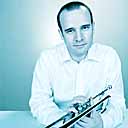
Colin Steele, the Scottish trumpeter, was in town to remind audiences south of the border of the qualities that have led a continental European company (Germany's ACT label) to notice that his distinctive music is of much more than parochial interest. Steele hit the album-of-the-year lists in 2002 and 2004 with his previous two discs, and the trumpeter's regular partnership with pianist Dave Milligan is still on the same creative roll.
Milligan, who has played folk music as much as jazz in his career, is crucial to the Steele quintet's warmth, musicality and undemonstrative zest. But a player of comparable lyricism and proximity to folk roots has now been added in the shape of Irish saxophonist Michael Buckley. Indifferent to the common contemporary-jazz pursuit of sandblasting the audience with showers of notes, Buckley shapes his lines as elegantly as Milligan, and savours timbre with a patient attentiveness rather reminiscent of veteran Scottish saxist Bobby Wellins. He makes a good foil for Steele, who often opposes a similar lyricism (Chet Baker and Miles Davis are his models) with an old-fashioned brass bravura, sometimes leaning back to fire sharp, penetrating sounds at the ceiling.
Their jaunty opening feature, seamlessly joining a Scottish lilt to a mid-tempo jazz swinger, featured a phrase-swapping interlude for sax and trumpet, and ended on a slow, speculative coda. Buckley played wistful soprano lines around Steele's trumpet lament on Goodnight John Boy, before Dave Milligan confirmed both his melodic imagination and the kind of special touch that makes a piano note softly sing. Milligan accelerated to boogieing fast lines and trills on a jig-like theme from Steele's 2004 Journey Home album, and Buckley shook off his pensiveness to take the same piece by the scruff of the neck. By the set's close, the quintet had shifted from stepping elegantly but delicately to whirling ecstatically, with drummer Stu Ritchie and stand-in bassist Steve Watts leaning hard on the beat. A very musical crossover, with almost none of the stitching in view.
